

Take safety seriously with 6-monthly smoke alarm checks
A beep isn’t proof your smoke alarm will work. Many people assume that pressing the test button and hearing a sharp beep means their smoke alarm is fine. It feels reassuring, almost definitive. But in Australia, that single beep does not equal compliance, and it does not guarantee true safety.
For property owners, landlords, facility managers, and those overseeing commercial or multi-occupancy buildings, fire safety is far more than a quick battery check. AS 3786–2023 outlines a structured, documented approach to maintaining smoke detection systems. It goes beyond the “push test”, requiring systematic inspection, verification, and record-keeping to ensure your alarms will actually detect smoke when it matters most.
If your fire safety approach has been “install it and forget it”, your current reality may be more concerning than you realise.
Does your smoke alarm truly work?
A smoke alarm that beeps during a test does not automatically mean it can reliably detect smoke.
Dust accumulation, insect contamination, ageing components, poor placement, and weakened batteries can all reduce an alarm’s effectiveness without affecting the test sound. In some cases, an alarm may still make noise while its sensitivity to actual smoke is significantly diminished.
Relying solely on the manual test button can create a false sense of security. The button only confirms power and speaker function; it does not evaluate detection capability, sensor condition, proper installation, or overall system integrity.
Real protection comes from systematic maintenance and regular inspections, not the temporary reassurance of a beep.

What is AS 3786–2023?
AS 3786–2023 is the Australian Standard that governs the routine servicing, maintenance, and performance requirements of smoke detection and alarm systems.
It provides a nationally recognised framework covering:
- Inspection frequency – how often smoke alarms should be checked
- Servicing requirements – what must be assessed during maintenance
- Competency standards – who is qualified to perform professional inspections
- Record-keeping obligations – the documentation that must be maintained
For residential properties, six-monthly professional checks are widely regarded as best practice. Commercial, industrial, and multi-occupancy buildings often follow stricter schedules with more frequent inspections.
The intent of AS 3786–2023 is not bureaucracy; it is consistency, reliability, and safety. By standardising inspection and maintenance procedures, it reduces the risk of oversight and ensures smoke alarms perform as intended when every second counts.
Smoke alarm maintenance
Maintaining your smoke alarms requires more than just pressing the test button. Following a structured schedule helps ensure your alarms function reliably when it matters most.
| Maintenance Task | Recommended Frequency | Purpose / Notes |
|---|---|---|
| Manual Test | Every month | Press the test button to confirm the battery and siren are working correctly. |
| Check that alarms are mounted securely, free from obstructions, dust, or paint over sensors, and that there are no signs of damage. | ||
| Professional Check | Every 6 months | Inspect sensors, power supply, audibility, interconnection, and compliance. Clean sensors and surfaces to remove dust, debris, or insects that can reduce effectiveness. |
| Annual Battery Replacement | Every 12 months (often at the end of daylight savings) | Replace batteries in battery-operated alarms to prevent power failure. |
| Alarm Replacement | Every 10 years from manufacture | Replace all alarms regardless of power source, as sensors degrade over time and may fail to detect smoke. |
Following these intervals ensures your smoke alarms remain reliable, compliant, and ready to protect your home or property.
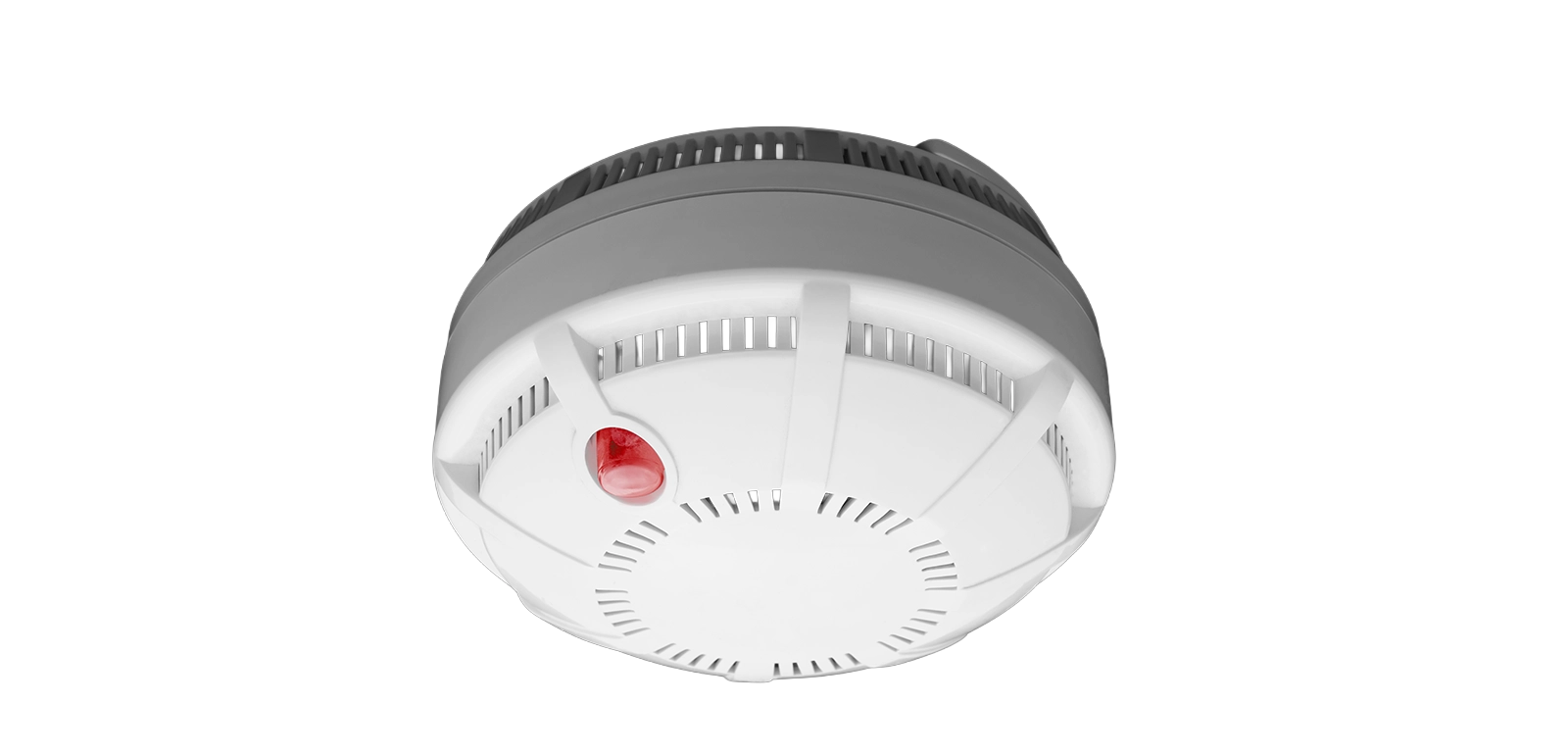
Checklist for professional smoke alarm inspection
A professional six-monthly inspection goes far beyond pressing the test button.
Key components of a thorough inspection typically include:
Sensor condition and sensitivity
Technicians verify that sensors are clean, unobstructed, and operating within specified sensitivity ranges. Dust, grease, paint, or insect contamination can silently degrade performance long before the alarm fails to sound.
Power supply integrity
For hard-wired systems, this includes checking mains connections, backup batteries, and circuit reliability. Alarms may sound during a push test even if the power supply is compromised or unstable.
Alarm audibility and coverage
Alarms must be audible throughout the areas they are intended to protect. Professionals assess placement, spacing, and volume to ensure complete coverage.
Installation compliance
Technicians review placement, mounting height, and spacing against current Australian standards to guarantee optimal performance and regulatory compliance.
System interconnection
In many modern homes and buildings, alarms are interconnected so that if one detects smoke, all alarms sound. Technicians also verify that when one alarm goes off, they all go off. This is a critical failure point that a simple individual push test often misses.
By systematically addressing these factors, professional inspections provide a level of assurance and reliability that a simple manual test cannot.
The power of the paperwork
Documentation may not sound dramatic, but in fire safety, it is essential.
A comprehensive service report creates a clear record of inspections, maintenance, faults, and rectifications. This serves several critical purposes:
- Demonstrates compliance with Australian standards and local regulations
- Provides evidence for insurance in the event of an incident
- Identifies recurring issues before they escalate into serious risks
- Supports accountability for landlords, building managers, and business owners
In many jurisdictions, especially for rental properties and commercial buildings, failing to maintain accurate records can be just as serious as neglecting the alarms themselves.
Thorough paperwork turns good intentions into verifiable, legally defensible fire safety practice.
Compliance is a whole system, not a single moment
Fire protection cannot rely on a single test, inspection, or certificate. True compliance is an ongoing system built on:
- Correct installation – ensuring alarms are positioned, spaced, and mounted according to standards
- Regular professional servicing – verifying sensors, power, audibility, and interconnection
- Reliable, standards-compliant equipment – using alarms that meet current Australian regulations
- Clear documentation – maintaining records of inspections, maintenance, and rectifications
- Responsible ownership – staying proactive and accountable for fire safety
A compliant property is not created by one successful inspection. It is sustained through consistent care, systematic checks, and attention over time.

Have you upgraded to photoelectric smoke alarms?
Did you know that in Queensland, all leased or sold properties are required to have smoke alarms that comply with the latest safety regulations? By 1 January 2027, all existing private homes, townhouses, and units must be fitted with interconnected photoelectric smoke alarms. This ensures early detection and gives occupants the best chance to respond in an emergency.
A key feature of the current Australian Standard is its focus on photoelectric (optical) smoke detection, which has largely replaced older ionisation alarms in modern homes.
Why choose photoelectric alarms?
Photoelectric alarms are particularly effective at detecting slow, smouldering fires—the type most common in residential settings. These fires can produce large amounts of smoke before flames are visible and often occur in bedrooms or living areas due to bedding, furniture, or electrical faults.
By comparison, ionisation alarms react more quickly to fast-flaming fires but may be slower to detect dense smoke from smouldering sources, which can be the greatest risk in homes.
Upgrading to photoelectric alarms not only ensures compliance with upcoming regulations but also provides more reliable protection for your home and family.
Fire safety you can rely on
Real protection and regulatory compliance both matter. Six-monthly smoke alarm checks go beyond a simple box-tick. They help safeguard people, homes, and businesses by keeping systems maintained, documented, and ready to perform when needed.
When alarms are correctly installed, regularly serviced, and aligned with Australian standards, compliance turns into confidence. Property owners gain peace of mind, tenants feel more secure, and workplaces operate with greater accountability.
If you are unsure whether your current system meets requirements, or if your alarms are due for servicing, consulting a qualified fire safety professional is a sensible next step. Expert guidance, proper installation, and structured maintenance can make the difference between hoping your alarms work and knowing they are prepared to.
Fire safety isn’t optional. It’s a responsibility worth taking seriously.