Get the jump on retail shoplifting
It’s less frantic dash, more calculated distraction.
Shoplifting often starts well before stock gets anywhere near the door. Merchandise gets shifted, blind spots get tested, staff attention gets pulled elsewhere, or activity around a high-value display starts to look a little unusual.
That is exactly where intelligent surveillance can make a difference. Rather than simply recording an incident for later, AI-assisted video analytics can help watch activity across the store, recognise when something falls outside expected patterns and direct staff attention to the places that may deserve a closer look.
It is not about technology deciding who is or is not a shoplifter. It is about giving staff an extra set of eyes, with some intelligence behind them, so unusual activity is easier to notice while there is still time to respond.
Spot the pattern before the loss
Traditional retail security can be heavily weighted towards what happens at the end: an alarm sounds, an item is discovered missing or footage is reviewed after the event.
Intelligent surveillance shifts some of that attention earlier. Depending on the system, analytics can help identify events such as unusual movement, prolonged presence in a particular area or activity around locations that have been identified as higher risk. Instead of asking staff to keep an eye on everything at once, the system helps bring potentially important moments to their attention.
That matters because retail theft rarely comes with one unmistakable warning sign. It can be opportunistic, planned or coordinated between several people, and perfectly innocent behaviour can sometimes look unusual too. The value lies in recognising combinations of behaviour, timing and location, then giving staff enough information to decide whether anything needs attention.
Five patterns intelligent surveillance can help bring into view
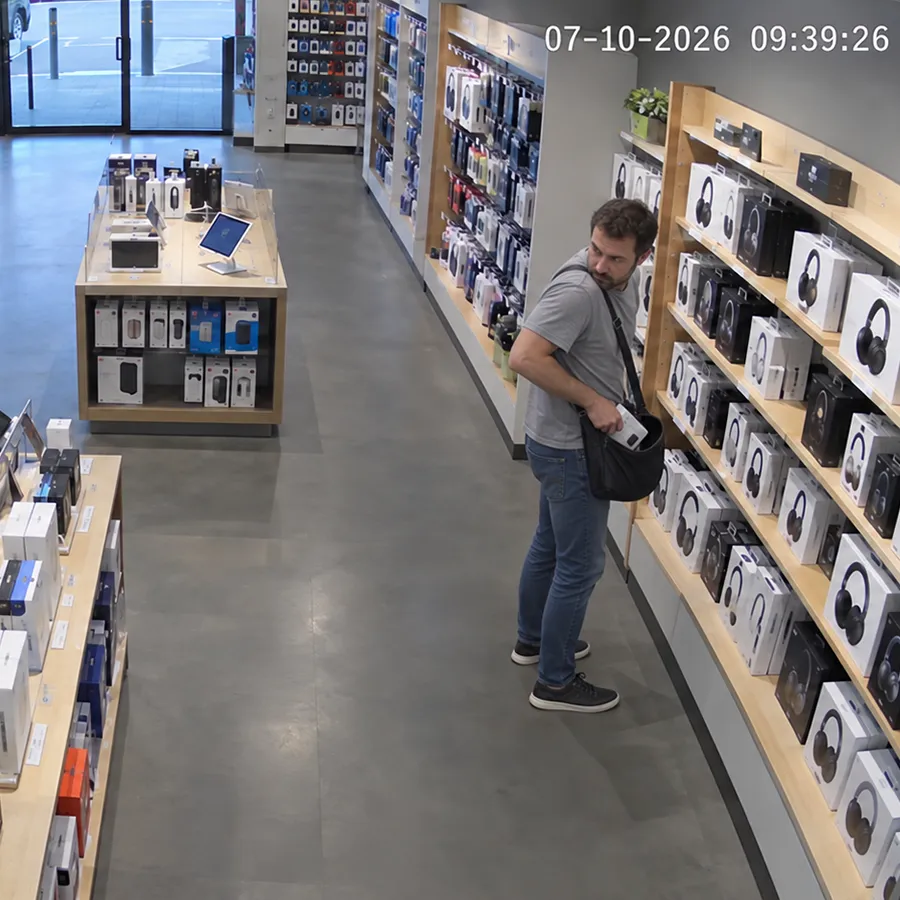
Intelligent surveillance can help draw attention to unusual activity around high-value merchandise before anything leaves the store.
A customer may move several products into a quieter section, gather expensive items together or repeatedly move merchandise between areas. Any one of those actions may be completely innocent, but repeated activity around vulnerable stock can become more useful when viewed in context.
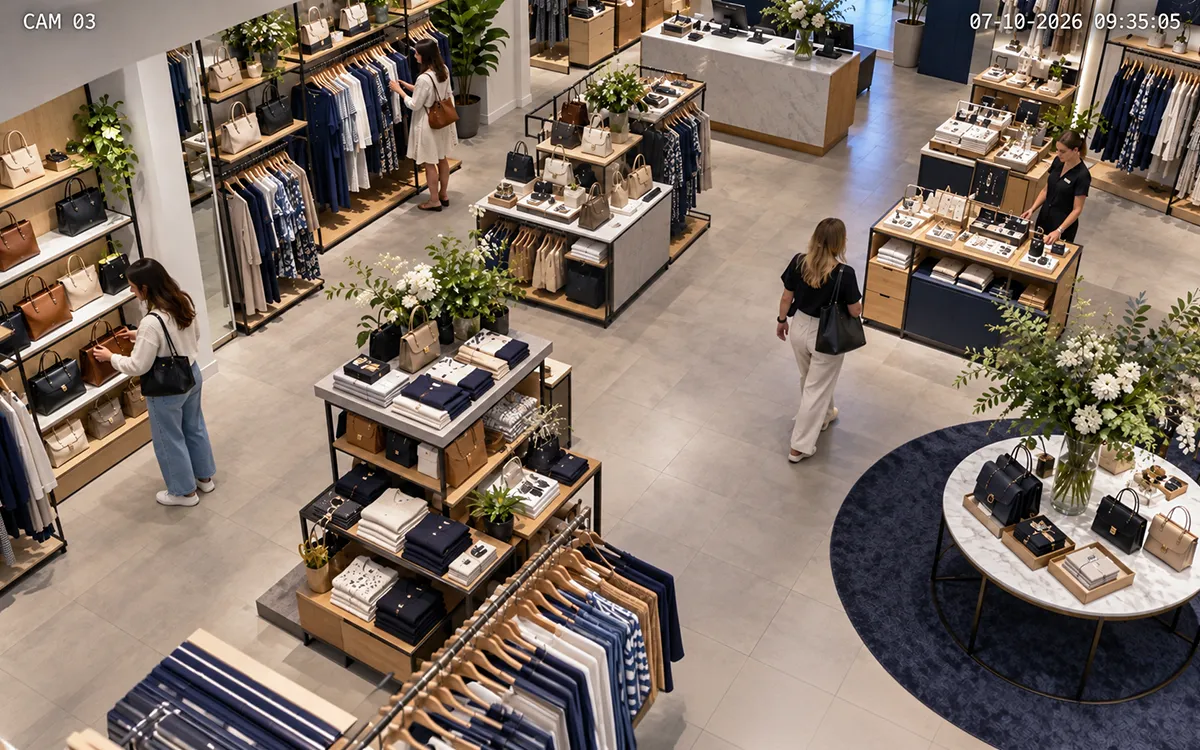
This is where good system design matters. Camera coverage should reflect where valuable products are located, where staff sightlines weaken and where merchandise has historically been most vulnerable. Analytics can then help staff notice activity in those areas rather than relying on someone happening to be looking in the right direction at the right moment.
Intelligent surveillance can also provide a wider view of how activity changes as staff move around the store.
Customers naturally notice employees, so simply looking towards a staff member means very little. More relevant patterns might include repeatedly moving towards quieter areas as staff leave, changing behaviour whenever someone approaches or spending extended periods in sections with limited staff visibility.
A staff member on the floor may only see one part of that sequence. A well-designed surveillance system can maintain visibility across several areas and help flag unusual movement, loitering or activity in vulnerable zones as it happens.
The alert itself is not a conclusion. It simply gives staff an earlier cue to look, assess the situation and, where appropriate, offer assistance or increase their presence in the area.
When staff attention is pulled in one direction, intelligent surveillance can keep watching everywhere else.
Some organised theft relies on exactly this gap. One person may occupy an employee with questions, request assistance in another part of the store or create a distraction while someone else remains near valuable merchandise.
Those events may look unrelated to someone working on the shop floor. Wider camera coverage can preserve the bigger picture, while analytics can help draw attention to unusual activity elsewhere while staff are occupied.
This is one of the clearest advantages of intelligent surveillance: it does not become distracted simply because the people in the store have to. Staff still make the judgement call, but the system can help make sure important activity is not missed.
Retailers need to balance loss prevention around fitting rooms with an obvious need to protect customer privacy. Intelligent security can help by focusing on movement and activity around these areas rather than intruding into private spaces.
Large quantities of high-value garments entering a fitting room, discrepancies between items going in and coming back, discarded packaging, missing hangers or altered tags can all warrant attention. Clear staff procedures remain essential, but appropriate camera coverage around entrances, exits and surrounding retail space can provide another layer of visibility.
Analytics may also help highlight unusual levels of activity or extended presence around vulnerable areas. Used alongside garment counts, staff checks and visible customer service, the technology helps close gaps without turning fitting rooms into surveillance spaces.
Intelligent surveillance is especially valuable in the parts of a store where human visibility naturally drops.
Emergency exits, rear doors, stock areas, quiet corners and transition points can all create opportunities when they are not well covered. Depending on the system, analytics can help flag prolonged presence, unusual movement, entry into restricted zones or activity occurring at unexpected times.
That means cameras can do more than produce a clear picture after someone has left. They can help alert staff to activity developing around vulnerable parts of the store before the situation reaches that point.
Good camera positioning remains critical. AI cannot compensate for a view that never captured the important area in the first place.
Good security helps staff respond naturally
One of the benefits of noticing activity earlier is that the response does not need to begin with confrontation.
If intelligent surveillance draws attention to something unusual, a staff member can simply move into the area, acknowledge the customer or offer assistance. That is normal customer service, but it also removes some of the anonymity and opportunity on which opportunistic theft can depend.
The technology provides awareness; people provide context. A person lingering near a display may simply be deciding what to buy, and unusual movement may have an entirely ordinary explanation. Staff can assess what is actually happening rather than treating an automated alert as proof of wrongdoing.
This combination is more useful than either technology or staff awareness on its own. The system helps identify where attention may be needed, while employees decide what the situation actually calls for.
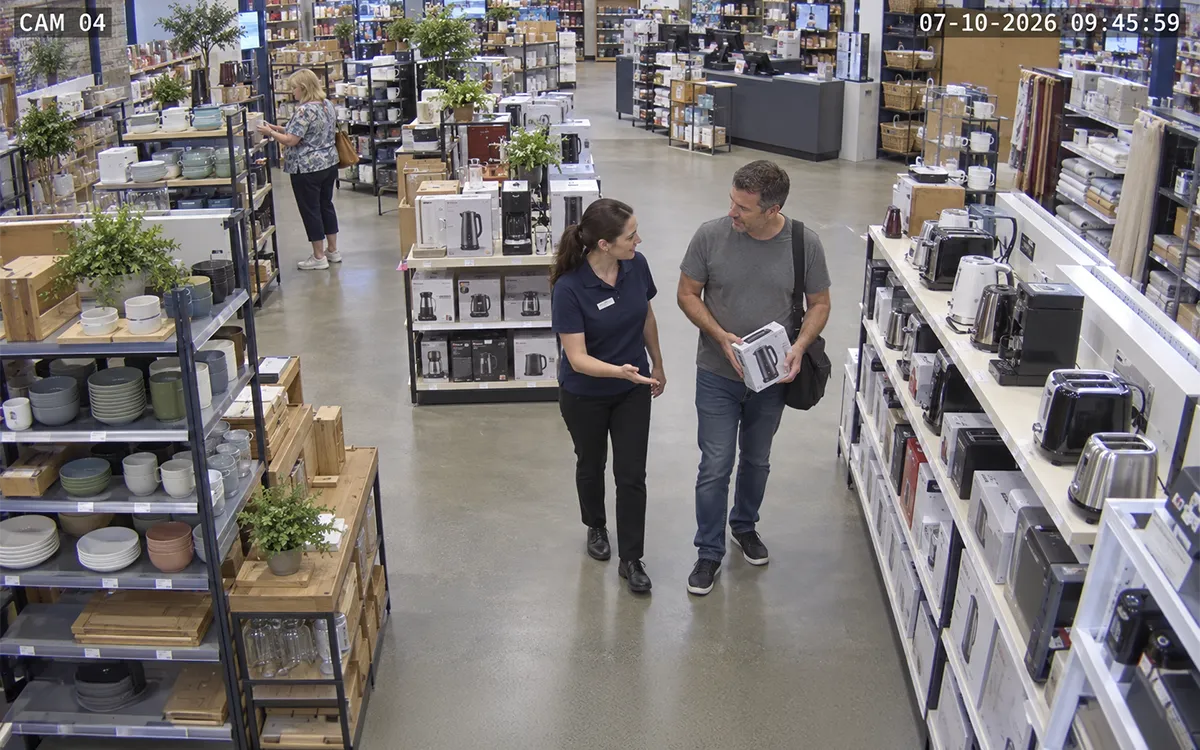
Cameras can do more than remember
Conventional CCTV remains valuable for reviewing incidents and collecting evidence, but modern video systems can play a much more active role.
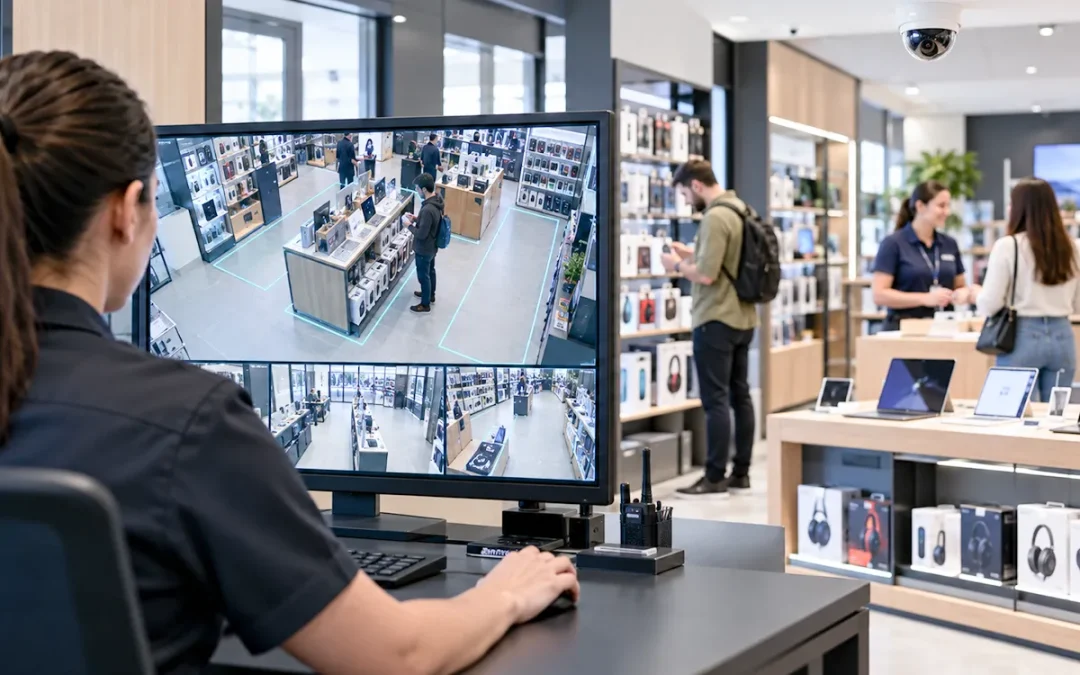
A busy retailer can generate an enormous amount of video every day. No employee or security operator can realistically give equal attention to every camera feed all of the time. Analytics can help filter that volume by identifying predefined events or surfacing activity that differs from what would normally be expected in a particular area.
Instead of adding more screens for someone to watch, intelligent surveillance can help decide which screen may be worth looking at.
That is a significant change in the role of CCTV. The system is no longer just remembering what happened. It is helping people notice what is happening.
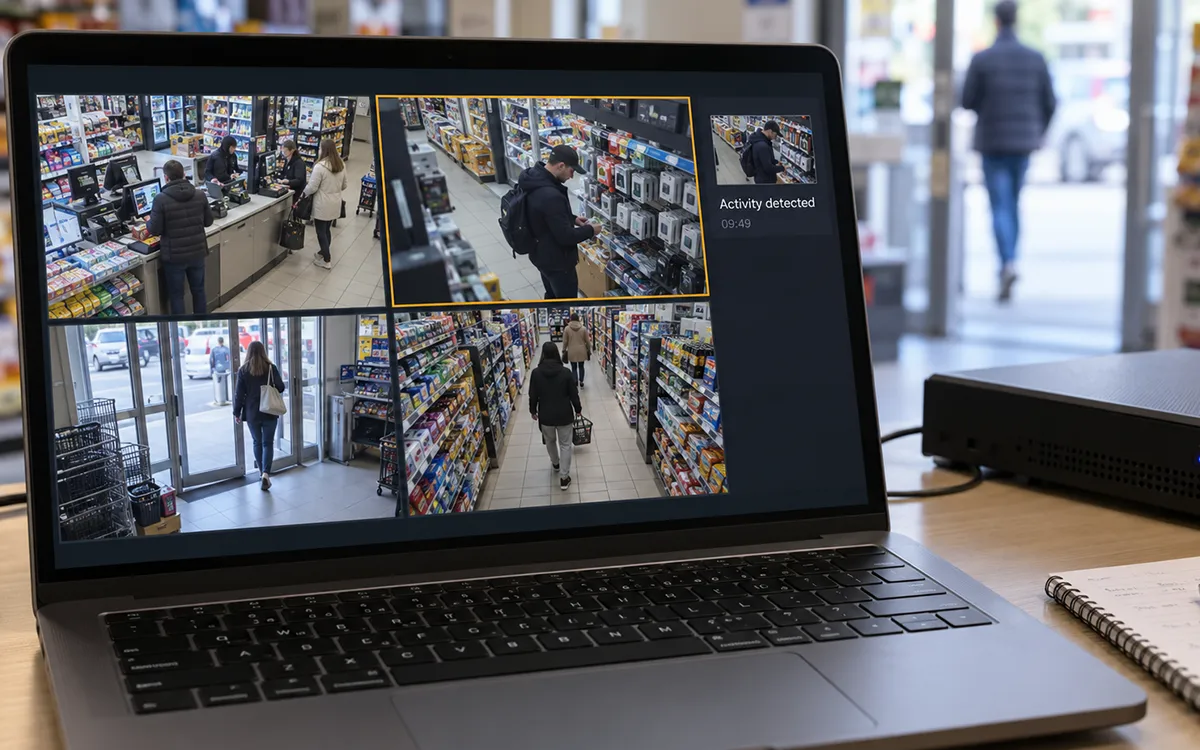
An alert should start the thought process
AI is useful because it can maintain attention across multiple views and look for patterns consistently. It is not useful when it is treated as a substitute for human judgement.
Someone lingering may simply be browsing. A person taking an unusual route through a store may be looking for a particular product. A group of customers talking to different staff members may just need help.
An intelligent system should therefore surface activity rather than label intent. Its job is closer to saying, “Take a look over here,” than, “This person is stealing.”
That distinction keeps the technology practical and allows retailers to gain the benefit of greater awareness without turning ordinary customer behaviour into suspicion.
Visible security still matters
Intelligence behind the scenes can also work alongside security customers can clearly see.
Visible cameras and Public View Monitors can reinforce that an area is actively monitored, while analytics help staff identify which moments across those camera views may warrant attention. One provides a visible deterrent; the other gives the surveillance system more practical value.
The strongest retail security generally comes from these layers working together rather than relying on any single device or measure.
Build the intelligence around the store
The most effective intelligent surveillance system starts with the store itself.
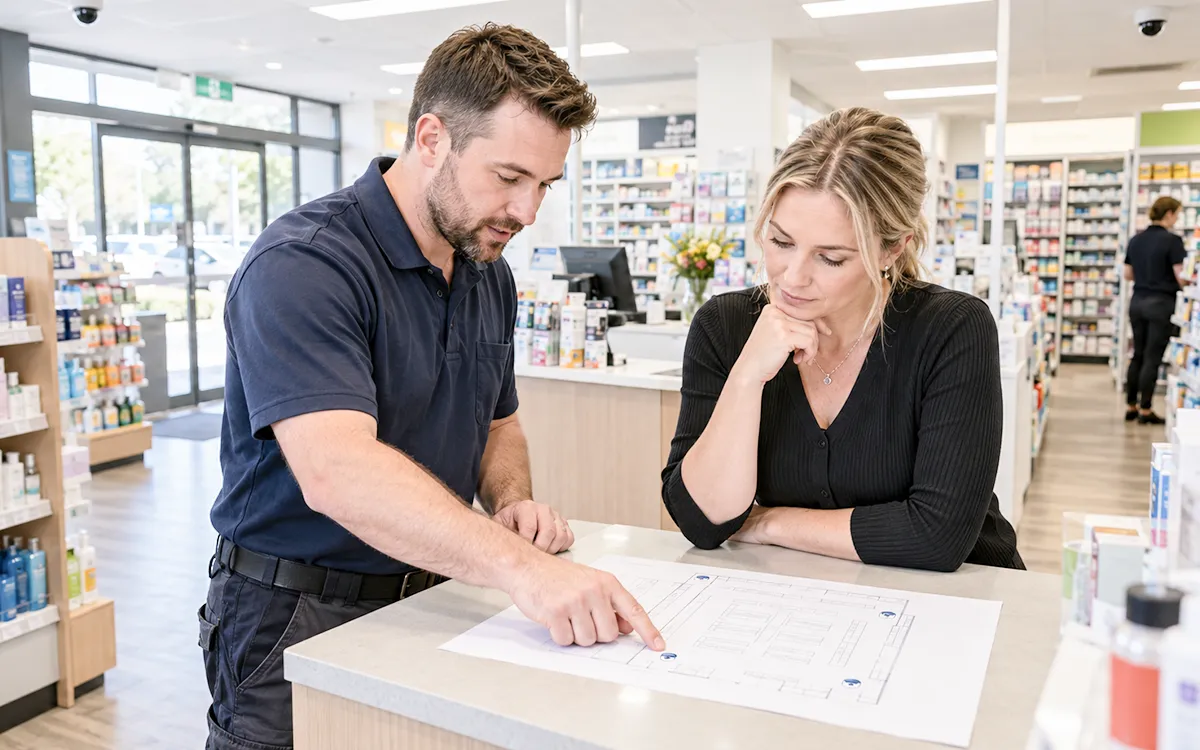
A pharmacy has different risks from a fashion retailer. An electronics store has different vulnerable products from a supermarket. Even two locations operated by the same business can have different layouts, staff positions, traffic patterns and blind spots.
That is why the starting question should not simply be, “How many cameras do we need?”
A better question is, “What do we need the system to notice?”
Which products need better visibility? Where does staff coverage drop? Which doors, displays or quiet areas create greater risk? What kinds of activity would genuinely be useful to bring to someone’s attention?
Once those questions are answered, camera placement, analytics, alerts, visible deterrents and staff procedures can be designed to work together.
Because getting the jump on retail shoplifting is not about watching everyone more closely. It is about giving your people a smarter set of eyes—and helping them notice the moments that matter before stock walks out the door.